The Awakening of 14 August 2002
Handling the UndeadThe Awakening of 14 August 2002 is the night when the dead return across Sweden, making death an unsettled condition rather than an unquestioned end. By morning, headlines announce that 2,000 Swedes have come back from the grave. At Stockholm Forest Cemetery, the first military grave openings turn that startling report into a physical emergency: the bodies are alive, but burial and decomposition have not left them untouched.
The Night and Its First Reports
The event is identified through the news that greets Flora and Peter shortly before nine o’clock. As they collect water containers and drive toward a Shell station, newspaper billboards announce that the dead have awakened and that 2,000 Swedes returned from the grave during the night. The headline gives the awakening a national scale before the people reading it can know what it means for the living or for the returned.
The papers offer competing visual frames for the same rupture. One billboard promotes exclusive photographs of what it calls a fright night, showing people in white apparently fighting naked old people among metal counters. Another resembles a horror-film poster, with shrouded elderly figures among gravestones. The images make the event legible through familiar sensational forms, but their differences also expose how little is yet understood: the returned are at once subjects of public fear, spectacle, and an unfolding emergency.
Grave Openings at Stockholm Forest Cemetery
An account from Aftonbladet reports that the military began examining at least 200 graves at Stockholm Forest Cemetery. At half past one in the morning, the fears surrounding the operation were confirmed: the buried were alive. The first body uncovered was an 87-year-old man who had been dead for six weeks. He was living despite advanced decomposition, and he tried to flee when the military cadets opened his grave.
The scene makes the awakening disturbing in a precise, bodily way. The man’s flesh peeled away when touched. Soldiers used his burial shroud to force him down, and two people were needed to restrain him. This is not a clean reversal in which a person simply rises restored to life: the body bears the visible consequences of six weeks underground, while its renewed movement presents an immediate danger to those trying to handle it.
The operation rapidly exceeds the control of its organizers. Three more corpses are dug up before ambulances arrive. Quarrels break out in several places, and commanding officers have to intervene in fights. By the time the newspaper account is being prepared, the cemetery has descended into chaos; some of the dead may have escaped. Nearby residents are urged to lock their doors, and the scheduled work is to continue through the remaining graves and then across the city’s other eighteen cemeteries. The initial attempt to examine and manage the phenomenon therefore expands into a much larger, uncertain undertaking.
What the Event Changes
An Expressen editorial presents the scale of the night as a challenge to the meaning of death itself. Two thousand people, whether previously declared dead or already buried, have returned to life. The editorial argues that this forces a reconsideration of human existence, since the accepted signs used to establish death can no longer be trusted and there is no reliable way to declare that a person will not return. The awakening is therefore not only a crisis of public safety; it unsettles the boundary on which medical judgment, burial, and ordinary expectations of finality depend.
The editorial also considers a biological explanation without claiming that research has settled the matter. If religious or paranormal accounts are set aside, it proposes that the body may be capable of restarting its metabolism, while acknowledging the absence of definitive research and pointing only to indications. That tentative reasoning contrasts with the certainty of the newspaper’s central report: whatever explanation may eventually be found, the bodies are moving again. The event makes an impossible fact public before anyone can supply a dependable account of its cause.
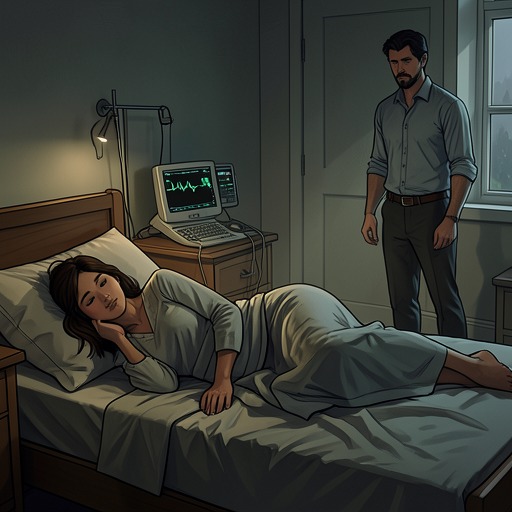
Elsewhere, the story registers the same crisis through intimate encounters with death and its aftermath. At Danderyd Hospital, Eva dies after colliding with an elk; her heart stops at 22:36, and David Zetterberg experiences the loss as the collapse of the future he had imagined with her. The hospital alarms and the public grave openings belong to different immediate scenes, but together they place personal bereavement beside a night in which death’s apparent finality is being overturned. The awakening does not erase grief or restore what has been lost; it makes the status and consequences of death more difficult to interpret.
The morning’s headlines, the decomposing man’s attempt to escape, and the disorder at the cemetery establish the event’s defining contradiction. Those who were buried are alive, yet their return does not make them whole or make their presence easy to manage. The Awakening begins as a report of extraordinary numbers and becomes a crisis of bodies, institutions, and belief, leaving the question of what death means newly open.